Techidemics: Beating Tech Anxiety in the Digital Age
Have you ever felt your heart rate spike just by looking at a screen full of unread notifications? If so, you are definitely not alone. We live in an era where being constantly connected is the norm, but this nonstop digital engagement has birthed a modern phenomenon: techidemics.
At its core, a techidemic explores the complex intersection between our rapidly advancing tech and our mental well-being. As new apps, devices, and platforms flood our daily lives, a growing number of people are experiencing profound tech anxiety. Let’s break down what this means, why it happens, and how you can reclaim your peace of mind in a hyper-connected world.
What Are Techidemics?
The term “techidemics” perfectly captures the widespread, almost contagious nature of technology-induced stress. It’s the modern epidemic of feeling overwhelmed, inadequate, or constantly on edge because of the digital tools we use every day.
While technology was designed to make our lives easier, it has simultaneously created new psychological hurdles. For many, the expectation to master new software, stay updated on social trends, and remain reachable 24/7 has turned convenience into a source of chronic anxiety.
The Rise of Tech Anxiety
Tech anxiety isn’t just about getting frustrated when your Wi-Fi drops. It is a specific form of distress, avoidance, or cognitive interference that occurs when engaging with technology. This can happen whether you are navigating a brand-new smartphone or trying to use a complex piece of workplace software.
Recognizing the Symptoms
How do you know if you are suffering from tech-induced stress? Keep an eye out for these common signs:
- Avoidance: Putting off tasks simply because they require using a new program.
- Negative Self-Talk: Believing you are “just not a tech person” every time a gadget malfunctions.
- Physical Symptoms: Tension, headaches, or a racing heart when dealing with digital platforms.
- Fear of Mistakes:Worrying that hitting the wrong button will delete important files or break the device.
How Tech Contributes to Our Stress
Understanding the root causes of our digital distress is the first step to overcoming it. Several psychological and environmental factors keep tech anxiety active.
Information Overload
We process more information in a single day than our ancestors did in a lifetime. Endless news feeds, constant emails, and rapid-fire text messages force our brains into a state of perpetual multitasking. This constant cognitive load easily translates into mental exhaustion.
The Pressure to Stay Connected
There is an unspoken rule in today’s culture that we must always be available. This “always-on” mentality blurs the boundaries between work and personal life. When your smartphone is both your office and your social life, escaping the pressure becomes incredibly difficult.
Poor Design and Frequent Updates
Sometimes, the problem isn’t you—it’s the tech. Poorly designed user interfaces, confusing error messages, and forced software updates can make anyone feel incompetent. When the tools we rely on change without warning, it triggers a very natural stress response.
Practical Strategies to Combat Tech Anxiety
The good news? You don’t have to throw your smartphone into a river to find relief. Here are some highly effective ways to manage your digital well-being.
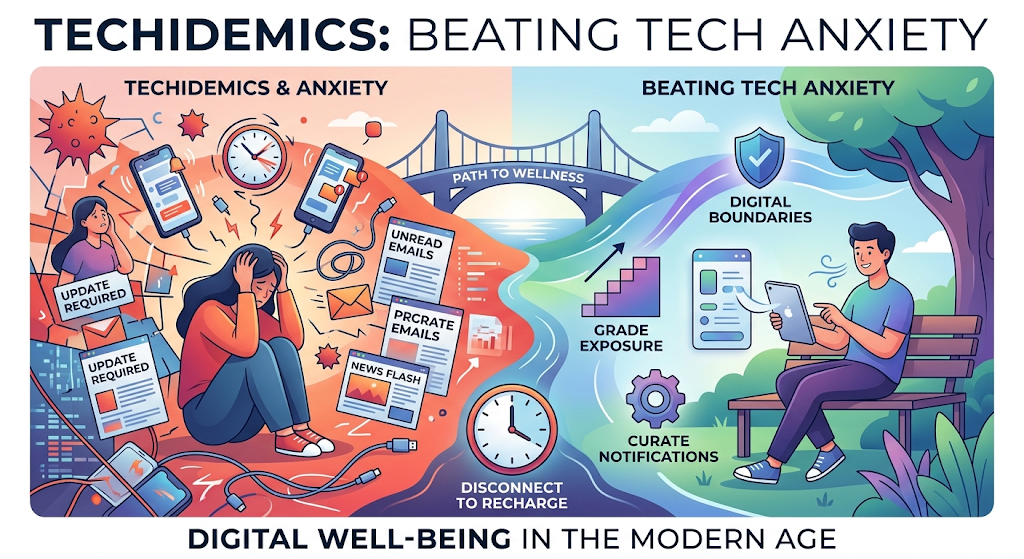
- Practice Graded Exposure: Don’t try to master a complex new software all at once. Start with the basics in a low-stakes environment. Build your confidence with small wins before tackling more advanced features.
- Redefine the Blame: When a device doesn’t work, stop blaming yourself. Practice saying, “This app is poorly designed,” rather than, “I am terrible at this.” Shifting the blame back to the tech protects your self-esteem.
- Set Strict Digital Boundaries: Designate “tech-free” zones in your home, like the bedroom or the dinner table. Give your brain scheduled breaks to disconnect and recharge.
- Curate Your Notifications: Turn off non-essential alerts. You don’t need a ping every time someone likes a photo or a store has a sale. Take back control of your attention.
The Future: Balancing Innovation and Mental Health
As we move forward, the conversation around techidemics is slowly changing how developers approach innovation. There is a growing demand for “anxiety tech”—solutions explicitly designed to support mental wellness.
From smartwatches that prompt you to take deep breaths to focus apps that block distracting websites, the same industry that causes our stress is now trying to cure it. The ultimate goal is to bridge the gap, making technology a tool for empowerment rather than a catalyst for burnout.
Frequently Asked Questions (FAQs)
What exactly is tech anxiety?
Tech anxiety is a psychological response characterized by worry, fear, or frustration when interacting with digital devices, software, or the internet. It often stems from a fear of making mistakes or feeling left behind by rapid digital advancements.
How do I know if I have tech-induced anxiety?
Common signs include actively avoiding new technologies, feeling overwhelmed by notifications, experiencing imposter syndrome regarding your digital skills, and feeling physical stress when forced to troubleshoot a device.
Are there apps to help with screen-time anxiety?
Yes! Ironically, you can use tech to manage tech. Apps like Forest, Freedom, and various built-in screen-time trackers can help you block distractions and become more mindful of your digital consumption.
Is it normal to feel overwhelmed by constant software updates?
Absolutely. Frequent updates disrupt our established routines and force us to relearn interfaces. This is a recognized trigger for tech stress, and your frustration is completely valid.
Conclusion
The rise of techidemics highlights a crucial challenge of our modern era: finding a healthy balance in a digitally saturated world. While tech continues to evolve at a breakneck pace, your well-being should never be the price of progress. By setting firm boundaries, challenging negative self-talk, and remembering that it’s okay to unplug, you can successfully navigate anxiety and make technology work for you, not against you.
If you found these strategies helpful, consider taking a small step today. Try turning off your non-essential notifications for just 24 hours—you might be surprised by how much lighter you feel.