Mastering Derivative Classification Quizlet Study Guide & Key Rules
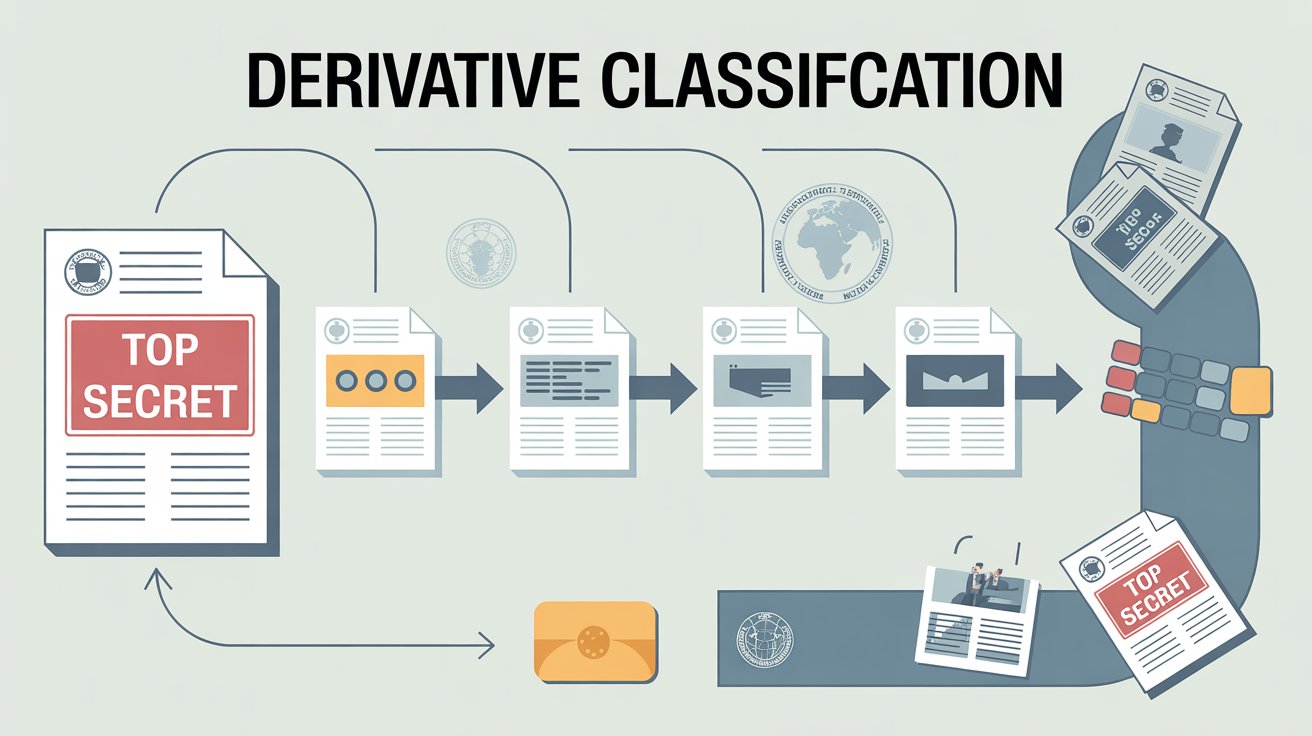
At its simplest, derivative classification is the act of taking information that is already marked as “Secret” or “Top Secret” and moving it into a new document. Think of it like a professional game of “Telephone.” You aren’t deciding what is a secret for the first time—that’s what the big bosses do. Instead, you are just carrying those existing secrets over to a new email, a report, or a presentation.
When you use a derivative classification quizlet to study, you learn that you are “incorporating, paraphrasing, restating, or generating” classified data in a new form. It is your job to make sure the new document has the exact same protection as the original source. If the source says “Secret,” your new document must also say “Secret.”
Quick Look: The Basics
| Feature | Details |
| Role Name | Derivative Classifier |
| Main Duty | Carry forward existing markings |
| Authority | No special “original” authority needed |
| Training | Required every two years (or annually for DoD) |
| Common Tools | Security Classification Guides (SCG) |
Who is a Derivative Classifier?
You might be surprised to learn that almost anyone with a security clearance can be a derivative classifier. You don’t need a fancy title from the President to do this job. If you are a cleared contractor or a government worker creating a document from classified sources, you are officially in the driver’s seat.
Using a derivative classification quizlet helps you remember that you are responsible for the accuracy of your markings. You must be identified by name and position on every document you create. This ensures that if there is a question later, the security team knows exactly who to talk to about how the information was handled.
The Three Main Sources You Must Use
When you are doing your work, you can’t just guess what is classified. You have to follow the rules laid out in specific “source” documents. Most training modules and derivative classification quizlet sets focus on three primary sources:
- Security Classification Guides (SCG): This is the “Gold Standard.” It is a book or list that tells you exactly what is classified for a specific project.
- Source Documents: This is an existing document that is already marked. If you copy a paragraph from a marked memo, that memo is your source.
- DD Form 254: For contractors, this form provides the specific guidance for a contract, often pointing you toward the right SCG to use.
How to Handle Multiple Sources
Sometimes, life gets complicated. You might be writing a report that uses information from three different “Secret” documents. What do you do? This is a common question on any derivative classification quizlet.
When you use multiple sources, you have to look at the “Declassify On” dates for all of them. You must carry forward the date that is the furthest in the future. This is called the “longest period of classification.” You also have to keep a list of all the sources you used so that others can trace back where the secrets came from.
Avoiding the “Over-Classification” Trap
One of the biggest mistakes people make is being too safe. You might think, “I’ll just mark everything Top Secret to be sure.” Actually, that is against the rules! Over-classification makes it harder for people to share information and costs the government a lot of money in extra security.
A good derivative classification quizlet will remind you that you should only classify what is absolutely necessary. If you see something that looks wrongly marked, you are actually encouraged to challenge it. Security is a team effort, and keeping things at the right level helps everyone stay safe without wasting resources.
The Secret to Marking Your Documents
Marking isn’t just about putting a stamp on the top of the page. You have to mark every single part! This includes the title, the paragraphs, and even the pictures. This is known as “portion marking.”
When you study with a derivative classification quizlet, you’ll learn that every paragraph should have a little letter in parentheses at the start, like (S) for Secret or (U) for Unclassified. This way, if someone only needs to see one part of your report, they know exactly what level of clearance they need for that specific section.
Why Training is a Big Deal
You can’t just start marking documents because you feel like it. You have to be trained first. For most people, this training happens every two years. However, if you are in the Department of Defense (DoD), you usually have to refresh your skills every single year.
If you miss your training, your “power” to classify documents is paused. It’s like a driver’s license—if it expires, you can’t get behind the wheel. Using a derivative classification quizlet is a great way to prep for the IF103.16 exam or other mandatory security tests so you never lose your status.
Prohibitions: What You Cannot Do
There are very strict rules about why we classify things. You can never mark a document as classified just to hide a mistake or to stop yourself from being embarrassed. Classification is only for protecting national security—nothing else.
If a derivative classification quizlet asks you if you can classify something to “restrain competition” or “conceal a violation of law,” the answer is a big, fat “No.” Following these ethical rules is a huge part of being a trustworthy professional in the security world.
The Difference Between “Original” and “Derivative”
This is the number one thing students get confused about.
- Original Classification is the first decision that information is a secret. Only a few high-level people (OCAs) can do this.
- Derivative Classification is just repeating what the OCA already decided.
Think of the OCA as the author of a book, and the derivative classifier as the person who quotes that book in an essay. You aren’t writing the story; you are just sharing parts of it while giving credit to the original source. A derivative classification quizlet will often test you on this specific distinction.
Wrapping Up: Your Next Steps
Staying sharp on security rules keeps our country safe and keeps your career on track. Derivative classification is all about consistency, honesty, and following the guidebooks. By using a derivative classification quizlet, you can turn a complex government requirement into a simple, manageable part of your workday.
Remember, when in doubt, check the Security Classification Guide (SCG). It is your best friend in the world of classified data!
Frequently Asked Questions
1. Does copying a document count as derivative classification?
No. Simply photocopying or printing an existing document is not derivative classification. You only become a derivative classifier when you create new material using classified info.
2. What happens if I lose my training certificate?
Most agencies don’t keep a backup for you! It is very important to save or print your certificate immediately after passing your exam. You’ll need it to prove you are authorized to work.
3. What is the “Classified By” line?
This is a line on the front of your document that lists your name and position. It lets everyone know who is responsible for the classification decisions in that specific file.
4. How many classification levels are there?
There are three main levels: Top Secret, Secret, and Confidential. Each one represents a different level of damage that could happen if the info got out.
5. Can I use my memory to classify a document?
Never! You must always use an authorized source like an SCG or a marked document. Relying on memory is a major security violation.
6. Where can I find a good derivative classification quizlet?
Sites like Quizlet have many sets created by other students. Just make sure the set you pick is up-to-date with the latest Executive Orders (like E.O. 13526).