Industrial Automation and Robotics in California
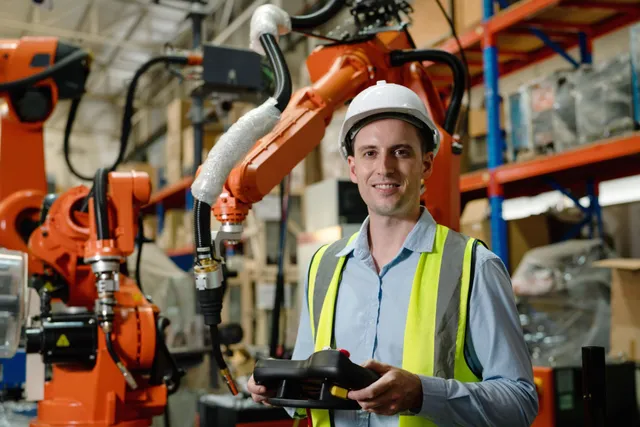
California has long been recognized as a global hub for innovation, technology, and advanced manufacturing. From Silicon Valley’s AI ecosystem to the state’s booming aerospace, automotive, electronics, and semiconductor industries, manufacturers are increasingly investing in next-generation automation technologies to remain competitive. At the center of this transformation lies the rapid adoption of Industrial automation, intelligent robotics, and AI-powered machine vision systems.
Modern factories are no longer dependent on isolated machines and manual inspection processes. Today’s smart manufacturing environments integrate robotics, AI, real-time analytics, and automated quality control systems into a connected ecosystem capable of delivering higher productivity, lower operational costs, and superior product quality.
Among the most impactful technologies driving this evolution are the Robotic Inspection System, AI-enabled machine vision platforms, and advanced Robotic Assembly solutions. Together, these technologies are redefining how California manufacturers design, produce, inspect, and deliver products across industries.
This article explores the growing role of industrial automation and robotics in California, the technologies enabling smart factories, and how manufacturers are leveraging AI-powered systems to achieve operational excellence.
The Growth of Industrial Automation in California
California’s manufacturing landscape is changing rapidly. Rising labor costs, global competition, stricter quality requirements, and supply chain pressures are accelerating the shift toward automation.
Industries across California are increasingly implementing:
- AI-powered machine vision systems
- Robotic inspection and quality control
- Automated assembly lines
- Autonomous material handling
- Predictive maintenance platforms
- Smart manufacturing analytics
The state’s strong technology ecosystem makes it an ideal environment for innovation in Industrial automation. Companies developing AI software, robotics, sensors, and imaging technologies are working closely with manufacturers to modernize production environments.
Automation adoption is especially strong in:
- Automotive manufacturing
- Semiconductor production
- Aerospace engineering
- Electronics assembly
- Medical device manufacturing
- Packaging and logistics
These industries require high-speed production, precision manufacturing, and micron-level quality inspection—areas where robotics and AI excel.
Why Manufacturers Are Adopting Robotics and AI
Traditional manufacturing processes face several limitations:
- Human inspection inconsistency
- Production bottlenecks
- Labor shortages
- Rising operational costs
- Increased defect rates
Automation solves many of these challenges by enabling continuous, accurate, and data-driven manufacturing processes.
Modern AI-powered systems provide:
- Real-time quality monitoring
- Faster production throughput
- Reduced human error
- Higher consistency
- Improved traceability
- Predictive process optimization
The integration of robotics with machine vision systems has become one of the most important developments in California’s manufacturing sector.
The Role of Machine Vision in Smart Manufacturing
At the core of modern automation lies the Machine Vision System—a technology that enables machines to “see,” analyze, and make decisions using cameras and AI algorithms.
Machine vision systems combine:
- Industrial cameras
- Advanced lighting systems
- AI-based software
- Real-time image processing
- Industrial communication interfaces
These systems inspect products, guide robots, measure dimensions, and detect defects with exceptional accuracy.
Modern AI-driven machine vision platforms can identify:
- Surface scratches and dents
- Assembly errors
- Missing components
- Color inconsistencies
- Dimensional variations
- Pattern defects
- Barcode and label errors
Unlike traditional rule-based vision systems, AI-enabled platforms continuously learn and improve over time.
This makes them ideal for complex inspection environments where product variations and subtle defects are difficult to detect manually.
Robotic Inspection Systems: Transforming Quality Control
One of the fastest-growing automation technologies in California manufacturing is the Robotic Inspection System.
These systems combine:
- Industrial robots
- Machine vision cameras
- AI-powered defect detection
- Motion control systems
- Real-time analytics software
Robotic inspection systems automate the quality control process by moving cameras or sensors around components to inspect products from multiple angles.
How Robotic Inspection Systems Work
A typical robotic inspection process involves several steps:
1. Product Positioning
Products move into the inspection station using conveyors or robotic handling systems.
2. Robotic Movement
A robotic arm positions cameras, laser scanners, or sensors around the product.
3. Image Acquisition
High-resolution images or 3D scans are captured.
4. AI-Based Analysis
Machine vision software analyzes the images to detect defects, dimensional deviations, or assembly issues.
5. Automated Decision Making
The system automatically classifies products as:
- Pass
- Fail
- Rework required
6. Reporting and Traceability
Inspection data is stored for quality reporting and process optimization.
Benefits of Robotic Inspection Systems
Manufacturers in California are adopting robotic inspection systems because they offer major advantages over manual inspection.
1. Higher Inspection Accuracy
AI-based vision systems can detect defects invisible to the human eye, including:
- Micron-level cracks
- Surface inconsistencies
- Alignment errors
- Structural defects
2. Faster Inspection Speed
Robotic systems inspect products much faster than human operators while maintaining consistent accuracy.
3. 24/7 Operation
Automated systems can operate continuously without fatigue or performance degradation.
4. Improved Worker Safety
Robots can inspect hazardous or hard-to-reach areas without exposing workers to dangerous environments.
5. Real-Time Production Monitoring
Inspection data helps manufacturers identify process issues early and reduce waste.
Robotic Assembly: The Future of Manufacturing
Another major driver of automation growth in California is Robotic Assembly technology.
Robotic assembly systems automate repetitive manufacturing tasks such as:
- Component placement
- Fastening and screw driving
- Welding and bonding
- PCB assembly
- Packaging and palletizing
Modern robotic assembly systems combine:
- AI-guided robotics
- Machine vision alignment
- Force sensing
- Motion control
- Real-time process feedback
These technologies enable robots to perform highly precise assembly operations with minimal human intervention.
How Machine Vision Enhances Robotic Assembly
Machine vision systems play a critical role in robotic assembly applications.
Vision-guided robots can:
- Locate parts automatically
- Correct positioning errors
- Identify orientation
- Verify assembly quality
- Adapt to product variations
For example, in electronics manufacturing, machine vision systems guide robotic arms during PCB assembly to ensure accurate placement of microscopic components.
In automotive manufacturing, robots equipped with vision systems perform:
- Weld inspection
- Adhesive application
- Component alignment
- Assembly verification
This level of precision is difficult to achieve consistently using manual labor alone.
Industrial Automation Applications Across California Industries
Automotive Manufacturing
California’s EV and automotive sectors rely heavily on:
- AI-based defect detection
- Robotic welding
- Automated assembly systems
- Surface inspection technologies
Automation improves consistency and supports high-volume production.
Semiconductor Manufacturing
Chip manufacturing requires extreme precision.
Machine vision systems inspect:
- Wafer surfaces
- PCB assemblies
- Microscopic defects
- Component alignment
Robotics ensures contamination-free handling and assembly.
Aerospace Engineering
Aerospace manufacturers use robotic inspection systems for:
- Composite material inspection
- Dimensional verification
- Surface defect analysis
- Structural integrity testing
AI-powered inspection helps maintain strict aerospace quality standards.
Medical Device Manufacturing
Medical device manufacturers increasingly use robotic assembly and AI inspection systems to ensure:
- Sterility
- Precision assembly
- Surface quality
- Traceability compliance
The Rise of Smart Manufacturing in California
Smart manufacturing goes beyond simple automation.
It creates connected factories where:
- Machines communicate in real time
- AI systems analyze production data
- Robots adapt dynamically
- Quality systems self-optimize
Key technologies driving smart manufacturing include:
- Industrial IoT
- AI analytics
- Cloud computing
- Edge processing
- Predictive maintenance
- Digital twins
These technologies allow manufacturers to:
- Reduce downtime
- Improve efficiency
- Optimize production quality
- Lower operational costs
California continues to lead the adoption of these Industry 4.0 technologies.
Challenges in Industrial Automation Implementation
While automation offers significant benefits, manufacturers must also address several challenges.
1. Initial Investment Costs
Advanced robotics and AI systems require significant upfront investment.
However, long-term ROI often comes from:
- Reduced labor costs
- Lower defect rates
- Increased throughput
- Improved quality consistency
2. Integration Complexity
Integrating automation systems into existing production lines can be technically challenging.
Manufacturers must ensure compatibility between:
- PLC systems
- ERP platforms
- Vision systems
- Robotics controllers
3. Workforce Adaptation
Automation changes workforce requirements.
Companies increasingly need:
- Robotics engineers
- AI specialists
- Automation technicians
- Data analysts
Training and workforce development are becoming essential.
Future Trends in Robotics and Industrial Automation
The future of California manufacturing will be shaped by several emerging trends:
AI-Powered Adaptive Robotics
Robots will increasingly learn from data and adapt to changing production environments.
Collaborative Robots (Cobots)
Cobots will work safely alongside human operators.
3D Vision Systems
Advanced 3D imaging will improve robotic guidance and inspection accuracy.
Edge AI Processing
Real-time AI analysis directly on factory equipment will reduce latency and improve responsiveness.
Fully Autonomous Factories
Future factories will integrate robotics, AI, and IoT into fully connected manufacturing ecosystems.
The rapid evolution of Industrial automation is transforming manufacturing across California. From AI-powered machine vision systems to advanced Robotic Inspection System technologies and intelligent Robotic Assembly platforms, manufacturers are building smarter, faster, and more efficient production environments.
These technologies are not only improving quality and productivity—they are redefining the future of manufacturing itself. As industries continue to adopt AI, robotics, and smart factory technologies, California will remain at the forefront of industrial innovation.
For manufacturers seeking to remain competitive in an increasingly demanding global market, investing in automation is no longer optional—it is essential for long-term growth, operational excellence, and future-ready manufacturing.